Why a Full Day of Standing Still Can Leave Legs More Tired Than an Actual Workout
It seems backward that standing mostly still all day can leave legs feeling more wrecked than an actual hour-long workout, but the two create genuinely different kinds of fatigue, and standing’s version is tied to a mechanism that dynamic exercise actually engages and static standing doesn’t.

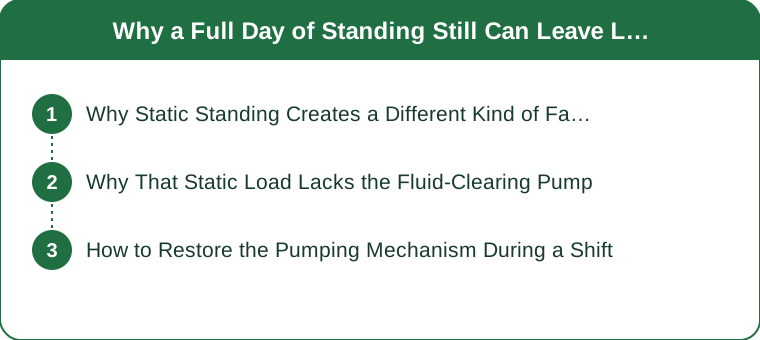
Why Static Standing Creates a Different Kind of Fatigue
The distinction: dynamic-movement-during-exercise-repeatedly-contracts-and-relaxes-leg-muscles-which-actively-pumps-blood-and-fluid-back-toward-the-heart-while-static-standing-holds-those-muscles-in-one-fixed-low-level-contraction-for-hours (dynamic movement during exercise repeatedly contracting and relaxing the leg muscles, which actively pumps blood and fluid back up toward the heart with every cycle, while static standing instead holds those same muscles in one continuous, low-level contraction for hours at a stretch, per the standing-all-day-real-fatigue-mechanism-guide logic — dynamic-movement-repeatedly-contracting-and-relaxing-leg-muscles-actively-pumping-blood-and-fluid-back-toward-the-heart-while-static-standing-holds-those-muscles-in-one-continuous-low-level-contraction-for-hours), and the reframe (two very different muscular activity patterns producing two very different kinds of tiredness)).

Why That Static Load Lacks the Fluid-Clearing Pump
The missing mechanism: without-the-repeated-contract-relax-cycle-blood-and-fluid-pool-lower-in-the-legs-over-the-course-of-a-shift-producing-a-heavy-swollen-fatigue-that-exercise-rarely-causes (without that repeated contract-and-relax cycle, blood and fluid gradually pool lower in the legs over the course of a full shift, producing the specific heavy, swollen kind of fatigue that a genuine workout, with its constant movement, rarely produces in the same way, per the standing-job-leg-swelling-guide logic — without-the-repeated-contract-and-relax-cycle-blood-and-fluid-gradually-pool-lower-in-the-legs-over-a-full-shift-producing-the-specific-heavy-swollen-fatigue-a-genuine-workout-rarely-produces), and the frame (the pooling, not muscular exhaustion in the exercise sense, being the actual source of that heavy end-of-shift feeling)).
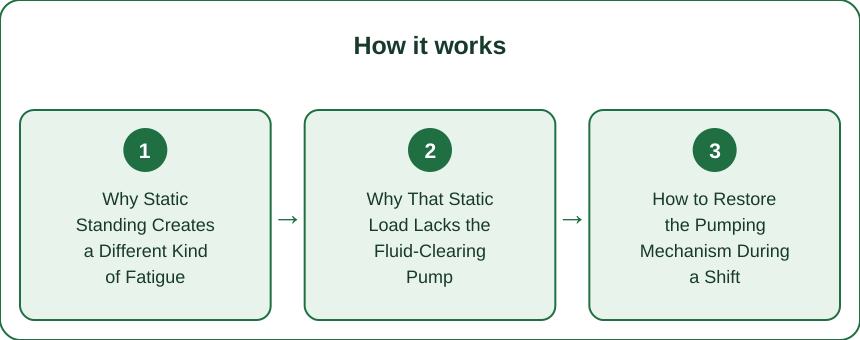
How to Restore the Pumping Mechanism During a Shift
The fix: take-brief-breaks-every-hour-to-walk-a-short-distance-or-do-calf-raises-in-place-specifically-to-reengage-the-contract-relax-cycle-standing-alone-doesnt-provide (taking brief breaks roughly every hour to walk a short distance or do a set of calf raises in place, specifically to reengage the contract-and-relax pumping cycle that standing still alone simply doesn’t provide, per the anti-fatigue-standing-tips-guide logic — taking-brief-breaks-roughly-every-hour-to-walk-a-short-distance-or-do-a-set-of-calf-raises-in-place-specifically-to-reengage-the-contract-and-relax-pumping-cycle-standing-still-alone-doesnt-provide), and the frame (short bursts of actual movement, not more standing, being what breaks the fluid pooling cycle).
Dynamic movement during exercise repeatedly contracts and relaxes the leg muscles, actively pumping blood and fluid back toward the heart with every cycle, while static standing instead holds those same muscles in one continuous, low-level contraction for hours, letting blood and fluid gradually pool lower in the legs and produce a specific heavy, swollen fatigue that a genuine workout rarely causes. Taking brief breaks roughly every hour to walk a short distance or do a set of calf raises in place reengages the pumping cycle that standing still alone simply doesn’t provide.
Keep Reading
This article is for general informational purposes only and is not medical advice. Always consult a qualified health professional for guidance specific to you.