Shoes for Standing All Day: What Actually Matters When Your Job Is on Your Feet
The standing worker’s shoes are load-bearing infrastructure — eight-plus hours of body weight through two contact patches — and the right pair is chosen by features, not brands. The standing-shoe guide: the science, the checklist and the rotation system that doubles comfort.

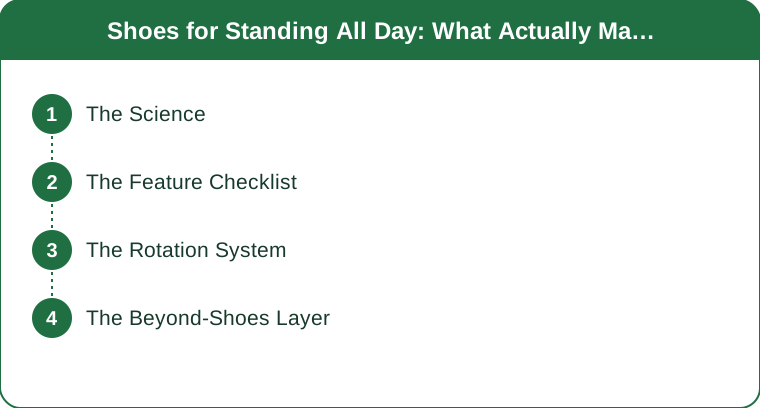
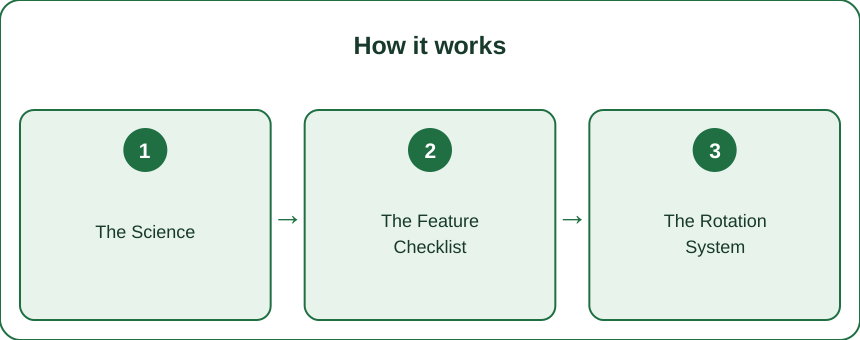
The Science
What standing asks of shoes: the static-load problem (standing being harder on feet than walking — the constant pressure without the walking cycle’s pumping relief; the standing-survival doctrine’s core physics), the cushioning role (the midsole absorbing what concrete returns — the cushioning-versus-support balance; the marshmallow-soft shoe that feels great at hour one and fails at hour six), the support geometry (the arch support matched to YOUR arch — the stability that prevents the inward roll that bills knees and hips per the alignment doctrine), the fit non-negotiables (the toe-box width for the foot that swells across a shift — the afternoon-fitting rule; the thumb-width toe room standard), and the individual honesty (the best shoe being foot-specific — the friend’s miracle shoe meaning nothing per the fit doctrine; the features below being the transferable knowledge).
The Feature Checklist
What to look for: the cushioning tier (the substantial-but-stable midsole — the running-shoe crossover working for many standing jobs; the energy-return foams that stay comfortable past hour six), the outsole demands (the slip resistance for the kitchen-and-hospital tier — the certified slip-rated standards where floors are wet; the tread that grips without catching), the arch-and-heel structure (the supported arch and stable heel counter — the squeeze-test: the heel cup that doesn’t collapse), the upper considerations (the breathable knit for the swelling foot versus the wipeable leather for the spill-prone job — the job’s fluids deciding), the weight factor (the light shoe taxing less across ten thousand steps), the removable-insole check (the aftermarket-insole compatibility — the customization path from the insole doctrine), and the job-specific notes (the nurse’s fluid-resistant slip-rated cushion, the retail worker’s all-day knit, the kitchen’s certified grip, the warehouse’s toe protection where required).

The Rotation System
Doubling comfort by pairs: the two-pair rule (the alternating pairs letting midsoles decompress — the foam recovering between shifts; the rotation extending each pair’s life beyond the sum per the gear doctrine), the different-shoes bonus (the two DIFFERENT models loading feet slightly differently — the repetitive-stress variation from the shoe-rotation doctrine), the break-in protocol (the new pair introduced on half-shifts — the never-new-shoes-on-a-double rule from the nothing-new doctrine), the replacement calendar (the standing shoes dying invisibly — the midsole compressed long before the upper wears; the 6-to-12-month honesty by hours; the press-test and the new-aches signal from the replacement doctrine), and the budget math (the two-good-pairs investment versus the chronic-pain alternative — the cost-per-hour arithmetic that makes quality footwear the cheapest medical intervention available).
The Beyond-Shoes Layer
The complete foot system: the insole upgrades (the aftermarket support for the shoe that’s almost right — the trial-friendly customization), the compression-socks partnership (the graduated compression for the swelling-and-heaviness from the standing doctrine — the sock-and-shoe system working together), the anti-fatigue-mat advocacy (the workstation mat request where standing is stationary — the equipment ask from the workplace doctrine), the off-shift foot care (the calf stretches, toe spreads and foot-rolling from the foot-recovery doctrine — the legs-up-the-wall evening from the lymph doctrine), the strength foundation (the calf-and-foot training from the calf doctrine — the intrinsic strength that shoes can’t replace; the barefoot-time balance at home per the barefoot doctrine), and the whole-body reminder (the shoes as one layer of the standing-survival system — the posture shifts, the movement snacks and the shift-recovery from the standing doctrine completing it; the feet, funded from the ground up). Features over brands, two pairs rotating, replaced by hours not looks: the foundation, properly shod.
Choose by features: substantial-but-stable cushioning, real arch support, wide toe box fitted in the afternoon, slip-rating if floors get wet. Run two pairs in rotation, replace by hours not appearance — foam dies invisibly around month six to twelve.
Keep Reading
This article is for general informational purposes only and is not medical advice. Always consult a qualified health professional for guidance specific to you.