Compression Socks for Standing Jobs: What They Do, What They Don't, and How to Choose
Quick Answer: For standing jobs, graduated compression socks (15-20 mmHg for most people) genuinely reduce end-of-shift heaviness, swelling, and achiness — they assist the veins fighting gravity all day. They don’t fix bad shoes, prevent varicose veins outright, or replace movement. Choose knee-high, graduated, correctly sized by measured calf — and put them on before the shift, not after.
Nurses, teachers, retail workers, and chefs keep rediscovering the same secret and evangelizing like they’ve found religion. The evangelism is mostly justified — with a couple of honest asterisks the marketing skips.

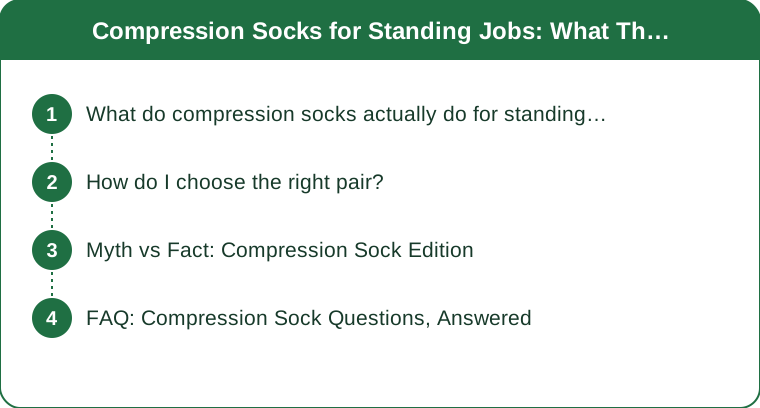
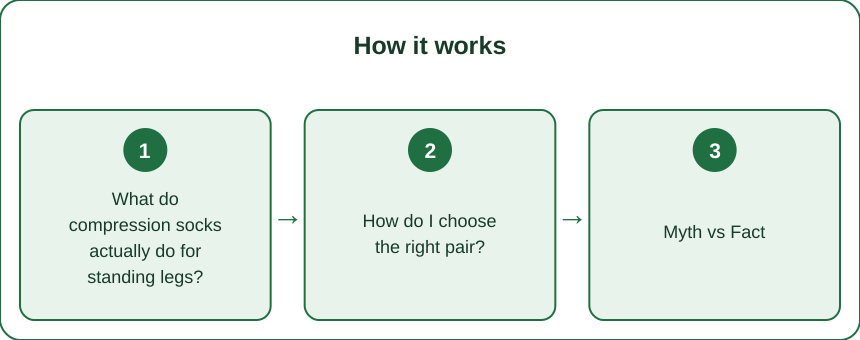
What do compression socks actually do for standing legs?
The standing-job problem is plumbing: blood returns from your legs against gravity via veins that rely on one-way valves and the muscle pump — your calf muscles squeezing veins with each step. Standing still is the worst case: full gravity, minimal pumping. Fluid pools, veins distend, tissue swells — that’s the 6pm heavy-leg feeling in one sentence.
Graduated compression (tightest at ankle, easing up the calf) works like a static assist to that system: it narrows distended veins so valves work better, opposes fluid pooling in tissue, and supports the muscle pump’s efficiency with every step you do take.
The measured effects match what wearers report: less end-of-day swelling (the sock-line dent test), less heaviness and ache, and fresher legs after the shift. It’s not placebo and not magic — it’s an externally-worn correction for a day your leg plumbing was never designed to love.
How do I choose the right pair?
The four specs that matter:
- Compression level: 15-20 mmHg is the standing-job sweet spot — real effect, comfortable all shift, no prescription. (20-30 mmHg exists for bigger issues, and belongs behind a professional’s advice.) ‘Compression’ socks with no mmHg rating are usually just snug socks.
- Graduated, knee-high: graduation is the mechanism — verify the word. Knee-high covers the calf pump; thigh-highs are unnecessary for occupational use.
- Sizing by measurement, not shoe size: measure your ankle and widest calf circumference (morning, unswollen) and use the brand’s chart. Wrong-size compression is either useless or a tourniquet — this is the step people skip and then blame the category.
- Fabric for your day: moisture-wicking blends for hot kitchens and hospital floors; merino blends for comfort-focused wear. Buy 2-3 pairs — elastic fatigues, so rotate and replace when they pull on easy (roughly every 4-6 months of regular wear).
Usage notes: on before the shift (prevention beats rescue — pooling starts at hour one), off in the evening at home; smooth out folds (a folded band concentrates pressure).

Myth vs Fact: Compression Sock Edition
Myth: They fix everything — shoes don’t matter now. Fact: Compression addresses venous return; it does nothing for the foot-strike fatigue, arch strain, and back-chain effects of bad footwear on concrete. Socks + proper shoes + micro-movement is the standing-job triad; each does a different job.
Myth: Wearing compression weakens your veins over time. Fact: No evidence for dependency at occupational levels — the assist doesn’t atrophy anything. The muscle pump still runs; the sock just improves its working conditions.
Myth: They prevent varicose veins, full stop. Fact: Overclaimed. They reduce the daily pooling and symptoms, and they’re standardly recommended around vein issues — but genetics and pregnancy write a lot of that story regardless. Manage expectations: symptom control is proven; total prevention isn’t promised.
The honest caveat: significant swelling that’s new, one-sided, painful, or pitting isn’t a sock situation — that’s a get-checked situation, and so is compression shopping with diabetes, arterial disease, or skin conditions in play. This is general information, not medical advice.
FAQ: Compression Sock Questions, Answered
Why do my legs still ache with compression socks on?
Check the triad: are the socks actually graduated and correctly sized? Are your shoes past their cushioning life (concrete eats midsoles in ~6-9 months of daily standing)? And are you getting any movement snacks — calf raises at the station, a lap at break? Compression is one leg of a three-legged stool.
Can I wear them every workday?
Yes — daily occupational wear at 15-20 mmHg is exactly the design case. Wash after each wear (oils degrade elastic), rotate pairs, and give skin the evening off.
Are the cute patterned ones as good as medical beige?
If the mmHg rating and graduation are real, pattern is irrelevant — and the fact that compression now comes in colors people want to wear is half the reason adherence improved. The spec sheet outranks the aesthetic, but they’re allowed to agree.
TL;DR:
- Standing pools blood in your legs; graduated compression assists the vein-valve-and-pump system all shift
- Spec sheet: 15-20 mmHg, graduated, knee-high, sized by measured ankle/calf — on before the shift starts
- They don’t replace decent shoes or movement snacks, and big/one-sided swelling is a professional matter
- Rotate 2-3 pairs; replace when they pull on easy
Your veins fought gravity alone for every shift so far — twenty dollars of engineered fabric is a reasonable ally to hire. This is general information, not medical advice.
Keep Reading
This article is for general informational purposes only and is not medical advice. Always consult a qualified health professional for guidance specific to you.